Terra i Foc

Artisan Ceramics Workshop
Founded in 1969 by Joan Martínez Peidro and his wife Isabel Serres. Handmade artisan ceramics in Penedès, with the collaboration of guest artists.
Craftsmanship is the human capacity to produce objects by hand or with the help of simple tools or machines. Artisans can also produce serial works, but they differ from industrial production in that each piece is made by hand, one by one, and this makes every object unique.
— 01
Joan and his résumé
A lifetime dedicated to artisan ceramics.
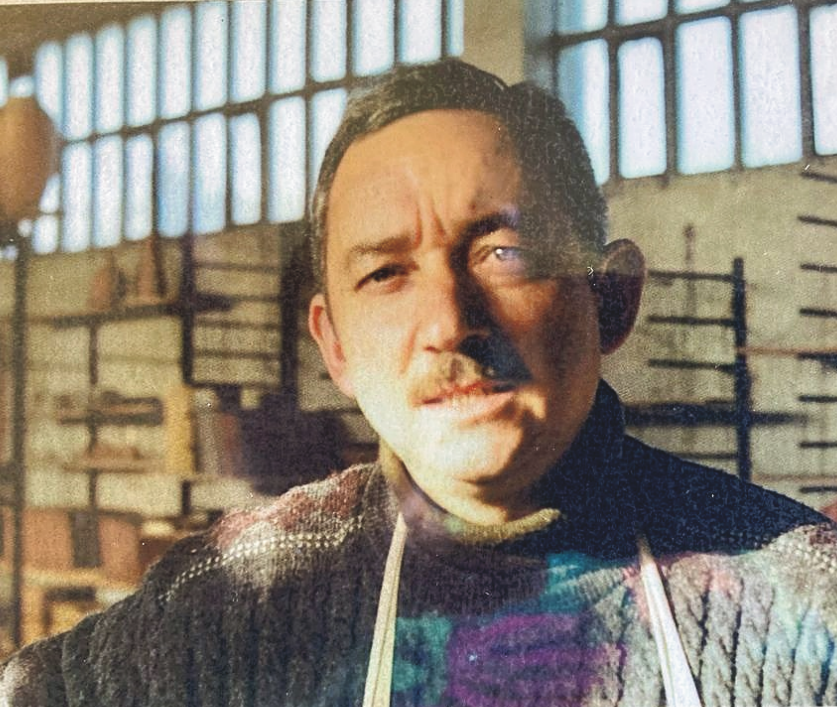
Joan Martínez Peidro
Ceramist · Founder
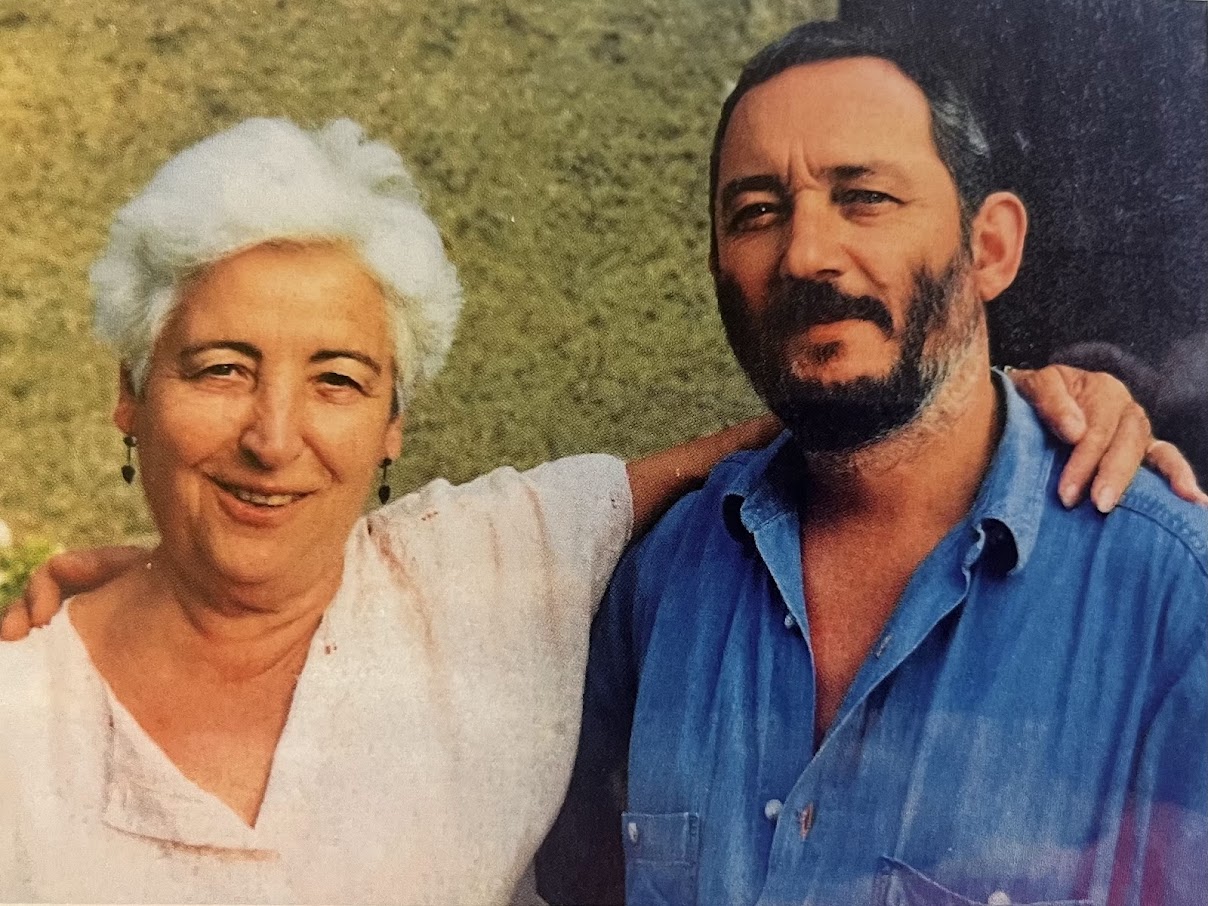
Joan Martínez Peidro, born in Barcelona in 1945, son, grandson and great-grandson of potters, established himself in 1969 at Carrer Escultor Ordóñez 32-34 in Barcelona, in the premises owned by his parents, to create his workplace — a ceramics workshop that would be called Terra i Foc. This happened in 1969 when he married Isabel Serres and they went to live in the building next door, at numbers 28-30, renting a flat owned by his parents. This is his story.
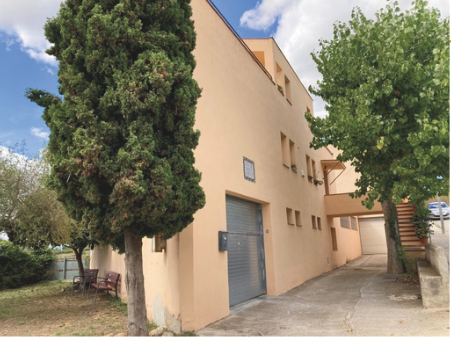
In 1966, on the land where his father’s pottery had stood, two blocks of flats were built with four doors per landing and their corresponding premises. Four years after Joan and Isabel settled in, the workshop became too small and in 1973 they moved permanently to El Pago, municipality of Subirats in the Alt Penedès region.
Résumé
- 1945 – Joan Martínez Peidro is born in the Sagrera neighbourhood, Barcelona
- — (1959) – Primary education at Acadèmia Sta. Eulàlia in Vilapicina. In 1959 he earns his commerce diploma at Escola Pràctica
- 1960-1967 – Studies at Escola Massana on a special scholarship
- 1962 – Works at Moldesa
- 1965 – Joins the Loki ceramics workshop of ceramist Francesc Albors
- 1966 – Joins Cerámicas San Joaquin in Badalona
- 1967 – Completes military service
- 1969 – Marries Isabel Serres and founds his own workshop Terra i Foc, Barcelona
- 1973-1974 – Moves the Terra i Foc workshop to El Pago, municipality of Subirats, forming an S.A.
- 1975 – The S.A. is dissolved and Joan continues at Terra i Foc until retirement
- 1987 – Participates in the 7th design competition at Expohogar Barcelona and wins a medal for his designs
- 1987-1997 – Collaborates with several companies on production: Casa Bohèmia, Carosa disseny, Elisa...
- 1994 – Exhibits with the Ceramistes Catalans collective in Madrid
- 1995-1997 – Exhibits at the ceramics and gift fair in Madrid with the Ceràmica Artística Catalana group
- 2007-2010 – Produces bisque for Manel Serran in addition to incoming commissions
- 2010 – Retires
— 02
A family of potters
Ceramics as a family legacy.
A family of potters: Joan’s great-grandparents — Josep Ma Martínez Alzina and Josepa Romeu Sitja — arrived in Barcelona on foot from La Selva del Camp during the Carlist Uprising of 1855–1856 and settled in the Sagrera neighbourhood. The house was popularly known as Can Fatxenda. They lived directly above the workshop and, like all potters, had the shop next door.
Joan Martínez i Romeu, Joan’s grandfather, was born on 1 September 1872. He was a potter, making all kinds of earthenware except fireproof pieces. He suffered from phlebitis and worked with an electric wheel. At the beginning of the 20th century he bought a premises at Carrer Portugal number 8 in Sagrera, which he later had to mortgage due to his illness. He married Leonor González Boada. They died young — she in 1930 and he in 1936. They had two children: Joan and Josepa.
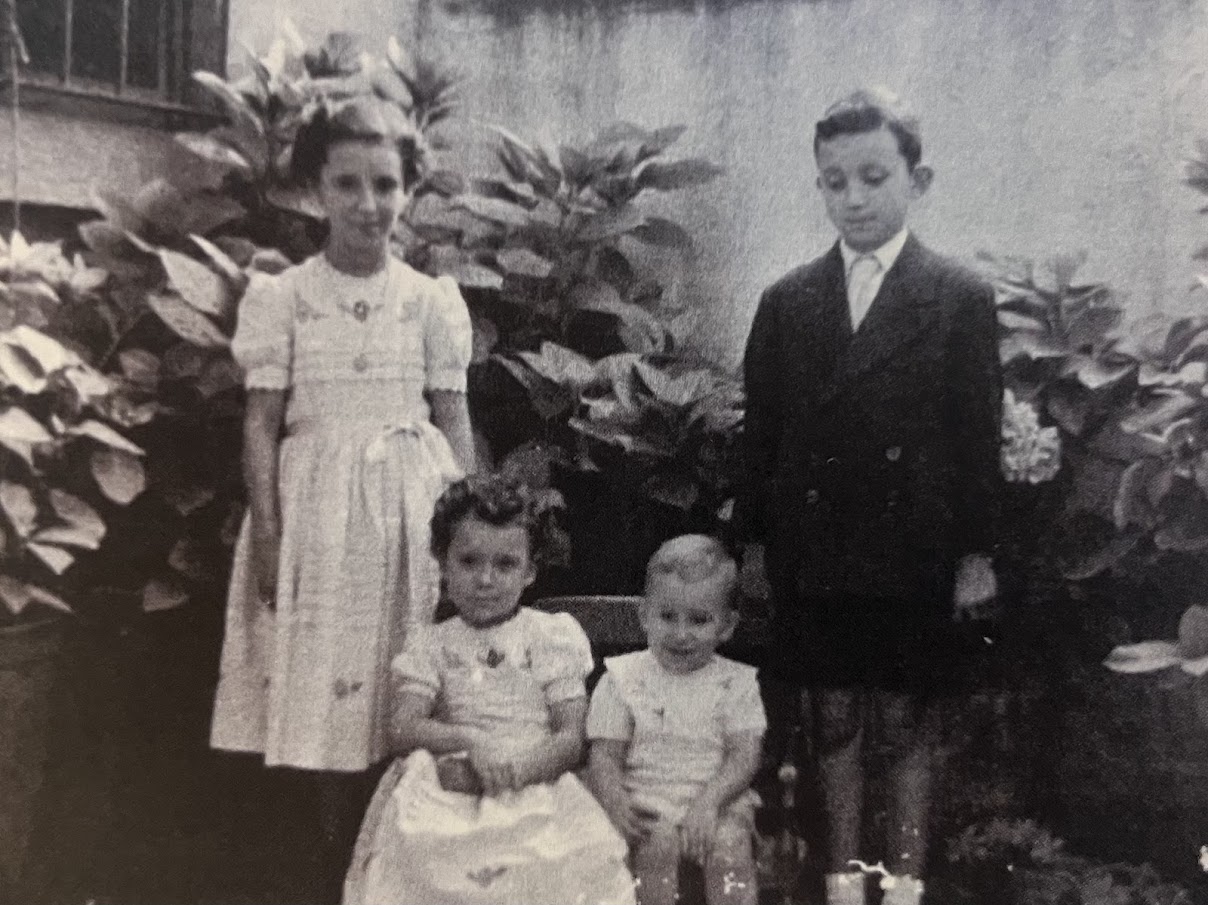
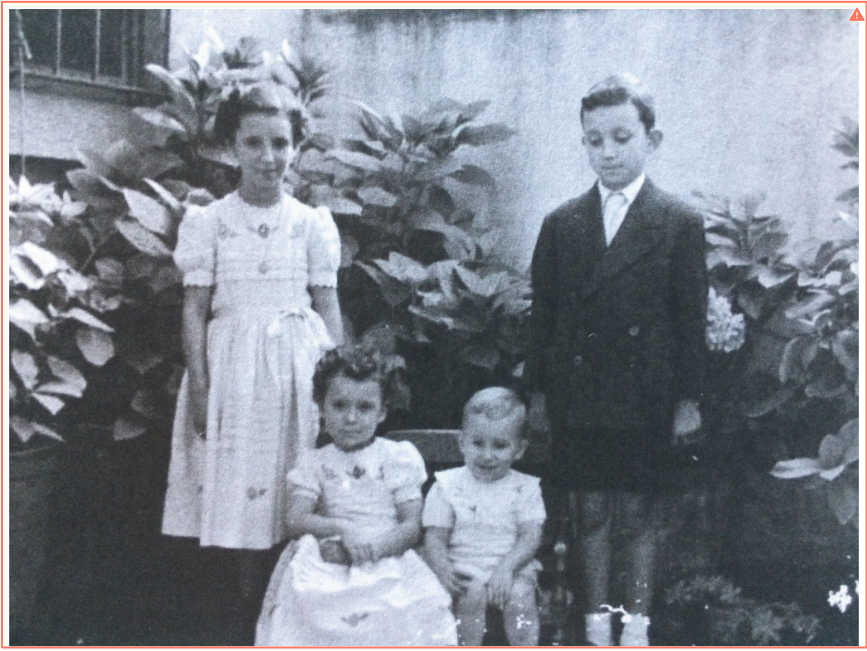
Joan’s father — Joan Martínez i González, born in 1909 — soon began working to replace his father in the workshop. He refused to marry until he had paid off the mortgage his father had left. He married on 22 May 1942 to Dolors Peidro Corbera (known familiarly as Lola) and they became the parents of Joan and three more children: Leonor, Núria and Pere. His father’s first pottery was at Carrer Portugal, number 8, in the Sagrera neighbourhood. Around 1950 things changed when his workshop was expropriated by the company Enasa, which was next door. This forced him to start again at Passatge Porta in the Vilapicina neighbourhood. Curiously, this land remained unused until recently.
On the occasion of the 12th Official International Trade Fair of Barcelona, from 10 to 25 June 1944, the father participated at the organisation’s request as a representative of the craft, throwing on the wheel daily in front of the public.
The father in the 1950s
The father's and mother's work
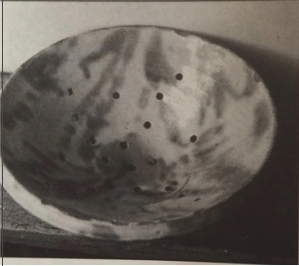
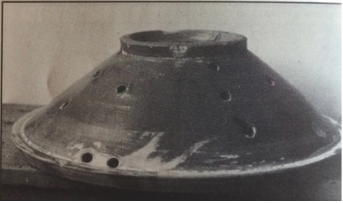
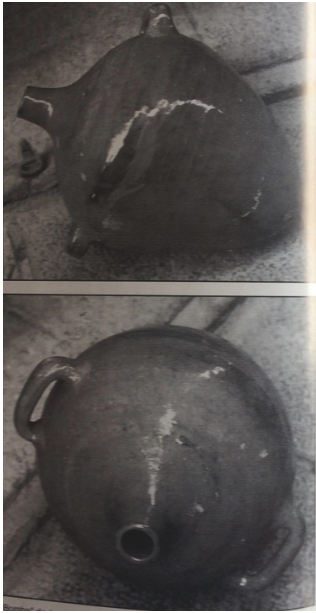
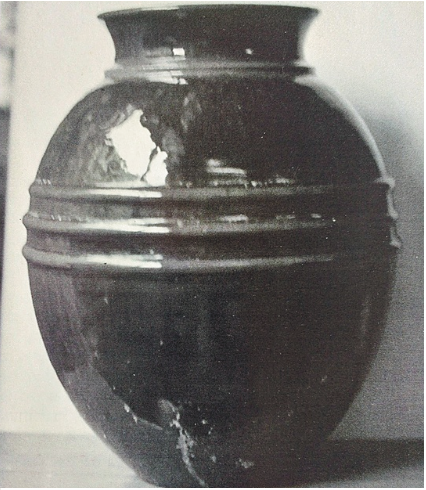
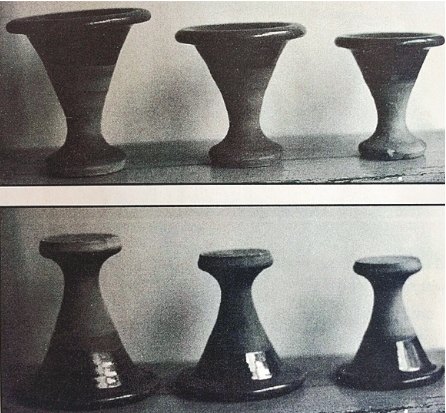
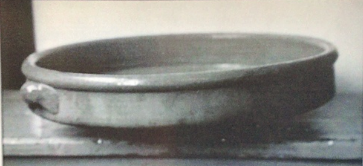
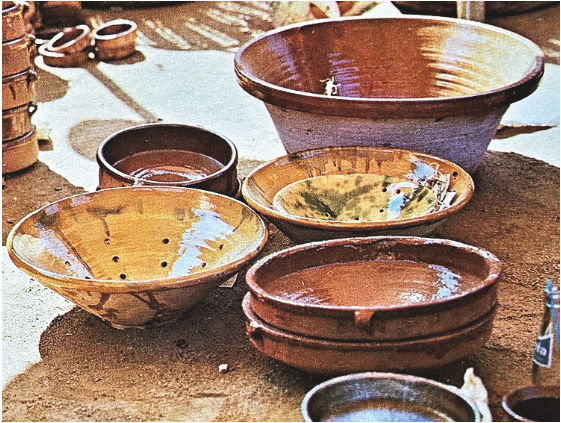
From 1950 onwards, the father mostly threw on the wheel: jars for honey and for storing oil; pitchers; piggy banks; mató moulds; flameres; pots for the laboratory of the Santa Creu mental institute at the end of Carrer Pi i Molist; feeders and drinkers for rabbits; brooders; round anthills and flowerpots of all sizes. He was also a potter for cooking vessels, but only threw the smaller pieces; the rest kept him busy enough. Pots and casseroles were made by a specialised worker named Vernis.
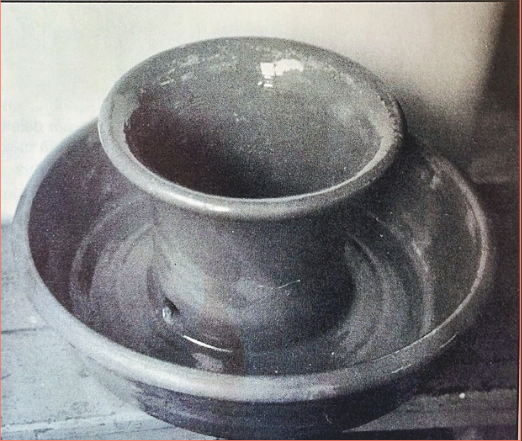
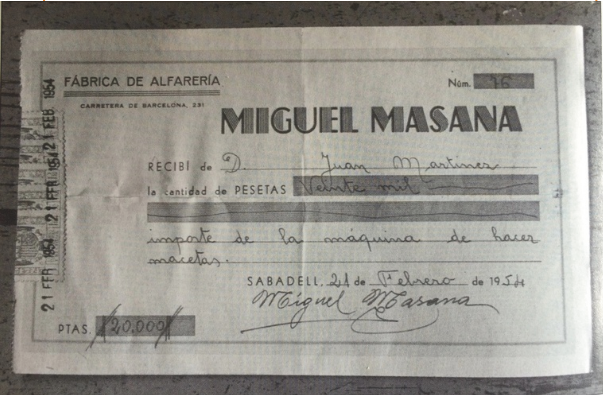
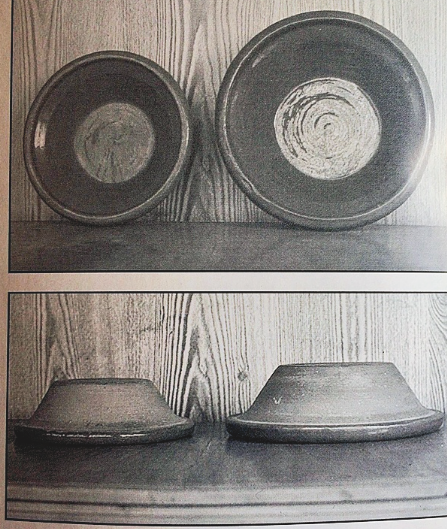
The mother, Dolors Peidro Corbera, made pieces using the estec technique (mechanical throwing with a plaster mould): mortars, small dishes for eating baby eels, all the Three Kings’ fair items and especially washbowls for doing the dishes. This is what Joan remembers.
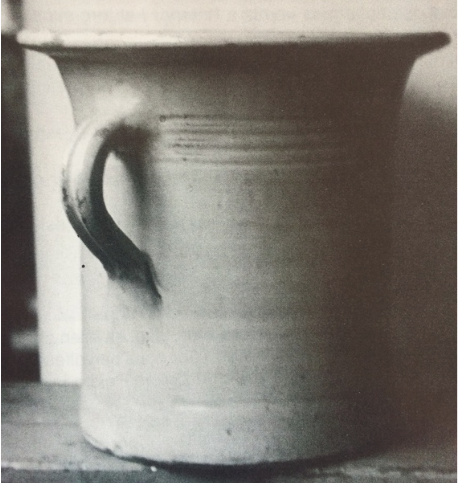
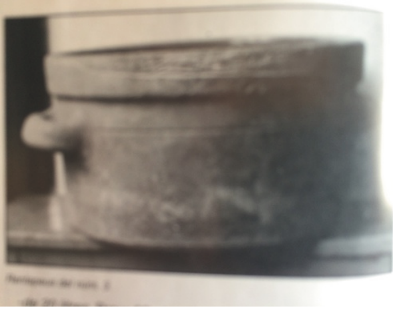
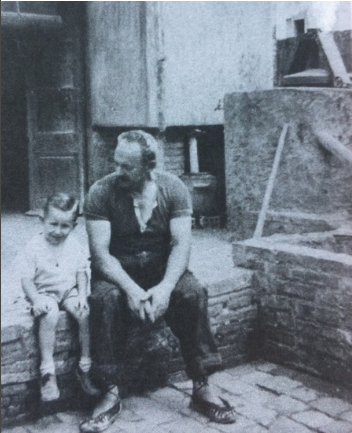
The father, Joan Martínez i González, had to stop working at his pottery on Passatge Porta due to illness from 1958 to 1963, and the 4 children were still too young to replace him. Even so, the mother, Lola, and Joan managed for a time, hoping the father would recover. This is why Joan began to learn the craft at a very young age.
In 1966, Joan’s father was offered the purchase of the entire workshop land to build 2 blocks with 4 flats per landing. In exchange, he was given various shops and flats. Joan’s father became the last potter in the city of Barcelona.
At Passatge Porta, where the house and shop were, Joan’s sister Núria now lives with her partner Juan. The flat that Joan and Isabel occupied when they lived in Barcelona went to his older sister Leonor, who still lives there with Jordi. The youngest brother, Pere, has always lived in Tavertet with Carme.
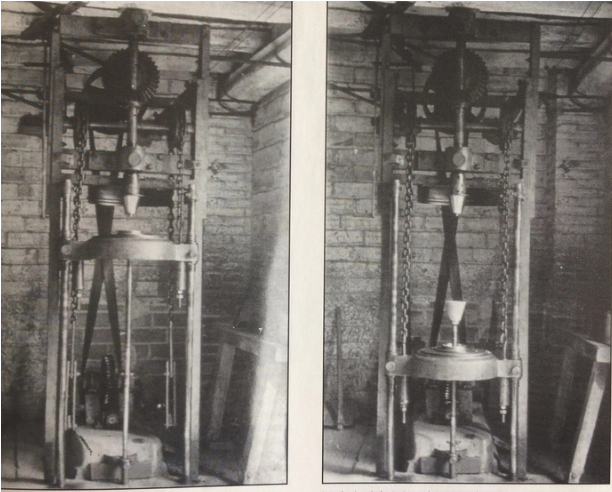
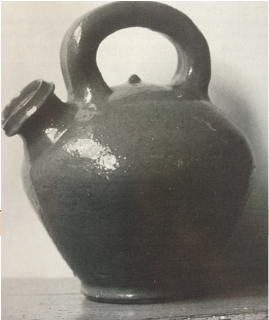
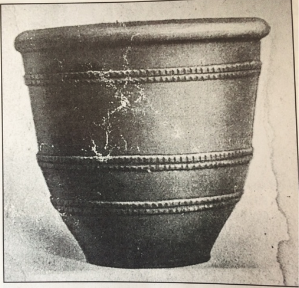
Pieces made at the family workshop
— 03
The workshop
From the potter's workshop to the ceramist's studio.
Design
The potter’s aim was to produce utilitarian pieces used in every home. He followed the designs demanded in the area and applied himself to making them as well as he could. They were anonymous, and known by the place they came from: Quart ceramics, Verdú, La Bisbal, Breda, Miravet…
In the past, potters made pieces for very specific functions: funnels, chestnut roasters, animal drinkers, bed warmers, hand warmers for market sellers to place under their skirts, smokers for removing beehives, or chafing dishes to keep food warm.
The earthenware pitcher (càntir) is an example of anonymous, perfect design. It serves as a water container while keeping water cool, and provides a hygienic, practical way for anyone to drink. Nobody contaminates the water and no glasses are needed. Pottery was a vital resource for many communities for centuries.
At the end of the 20th century, with the arrival of plastic, pottery became dispensable. Washbowls, draining racks, mató moulds, animal feeders, drinkers, containers of all kinds were made of plastic — cheaper, lighter, and unbreakable. Pots and casseroles became metal, plates became glass (Duralex).
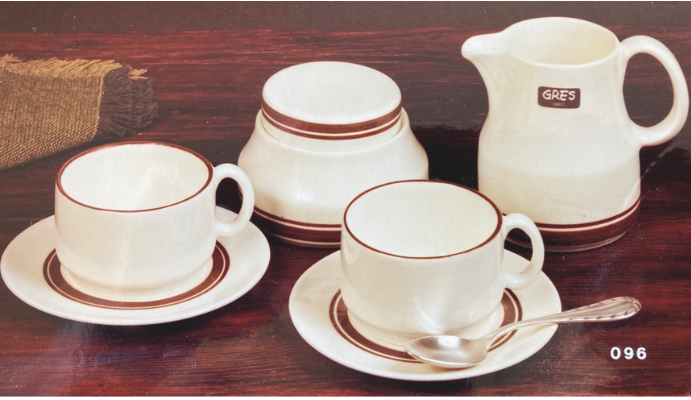
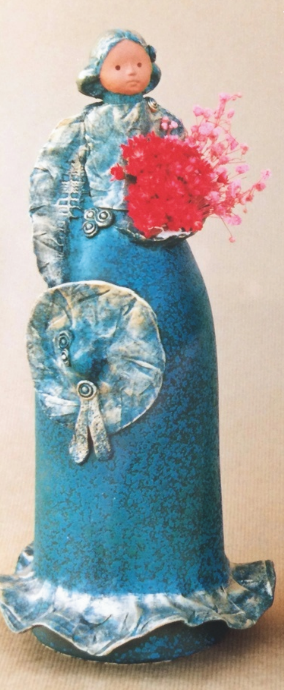
This led ceramists to begin designing other kinds of pieces, perhaps less utilitarian and more decorative. Design mattered more, and pieces began to be signed: Llorenç Artigues, Jordi Aguadé, Francesc Albors, the Serra family, Emilia Xargay, and even Joan Miró and Picasso. The way of working clay changed greatly in a short time.
The Space
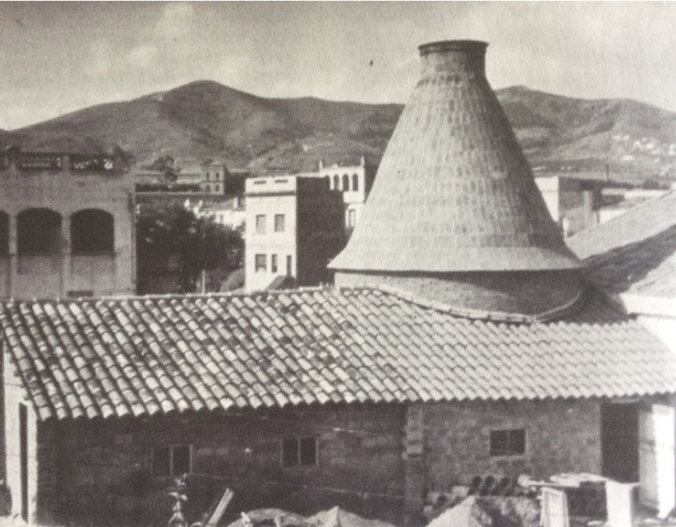
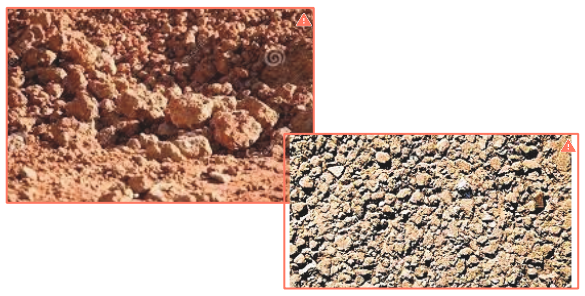
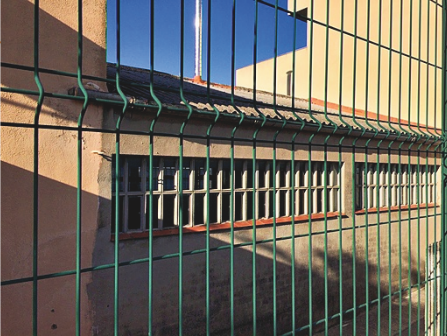
The potter needed considerable space for production. To store and prepare the clay chunks that arrived from construction excavations and transform them into the clay needed for the wheel and the estec. The basins for drying it. The barrers for drying the pieces once made, an enormous kiln for firing them, ample space for storing the wood for firing and another place for the shop where they sold them.
Normally, workshops were located in rural areas or away from houses, since the kilns gave off a lot of smoke and could disturb neighbours. It took about a month of work to fill the kiln and 3 to 5 days to fire a batch.
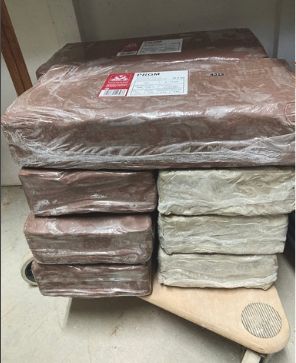
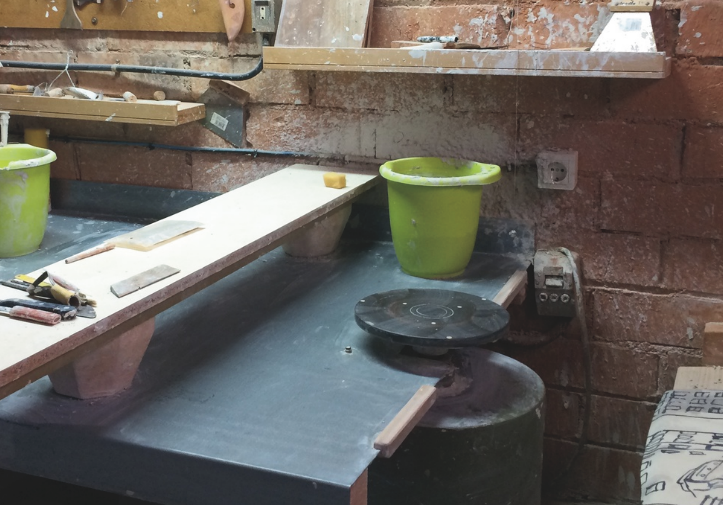
The ceramist was a craftsperson who did not need as much space. They bought clay ready to use and, since it arrived wrapped in plastic, could stack a lot in a small space. The workspace varied according to the procedures they used. In principle they had the wheel and the estec like the potters, but they needed many tables for the slip-casting process. Like the potter, the ceramist also needed barrers for drying pieces and shelves.
The ceramist’s kiln was electric — no need for wood storage — and much smaller. It could also run on diesel or gas, with sizes ranging from 40 cm³ usable for the smallest to 1 m³ for the largest. They were also cleaner. At first they only had a temperature reader supplemented by Seguer cones, and later they came with an automatic pyrometer that regulated temperature according to a programmed curve. They were lined with refractory blanket or refractory bricks.
Potter's Materials, Tools and Machines
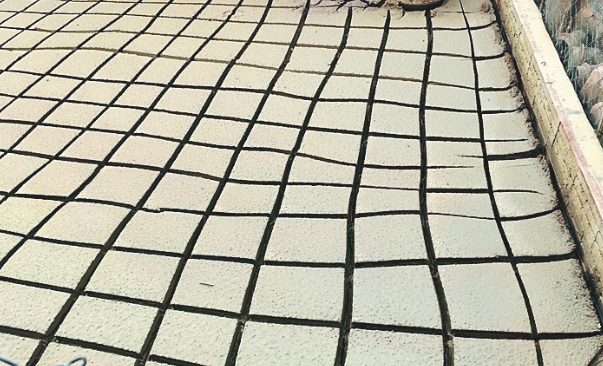
Before letting the sludge into the basin, it was swept clean and a layer of ash from the kiln, passed through a sieve, was spread on the bottom so the clay would not stick. Once the sludge entered the basin, the water that overflowed through holes at different heights drained into the sewer.
When no water remained on top of the clay, it was marked with a reed tipped with a metal rod, making a grid that, as it dried further, separated into squares along the lines. The soft clay slabs were stacked, soft side against the drier top, covered with borrasses and hosed down when needed.
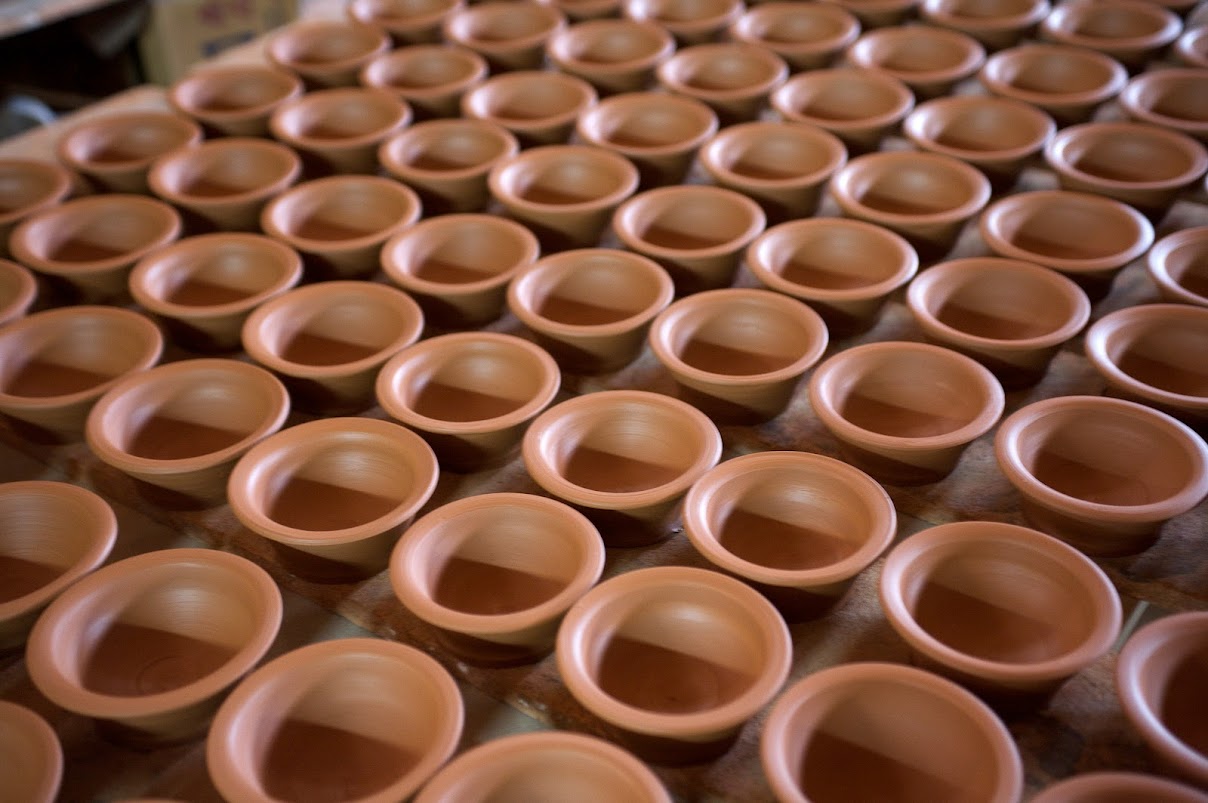
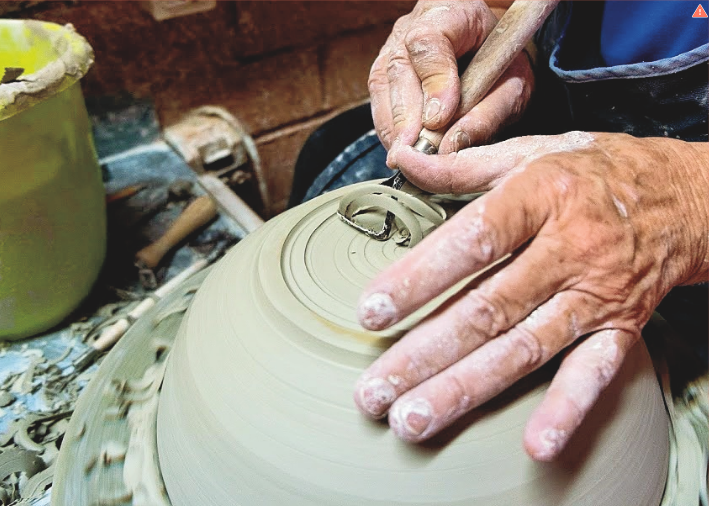
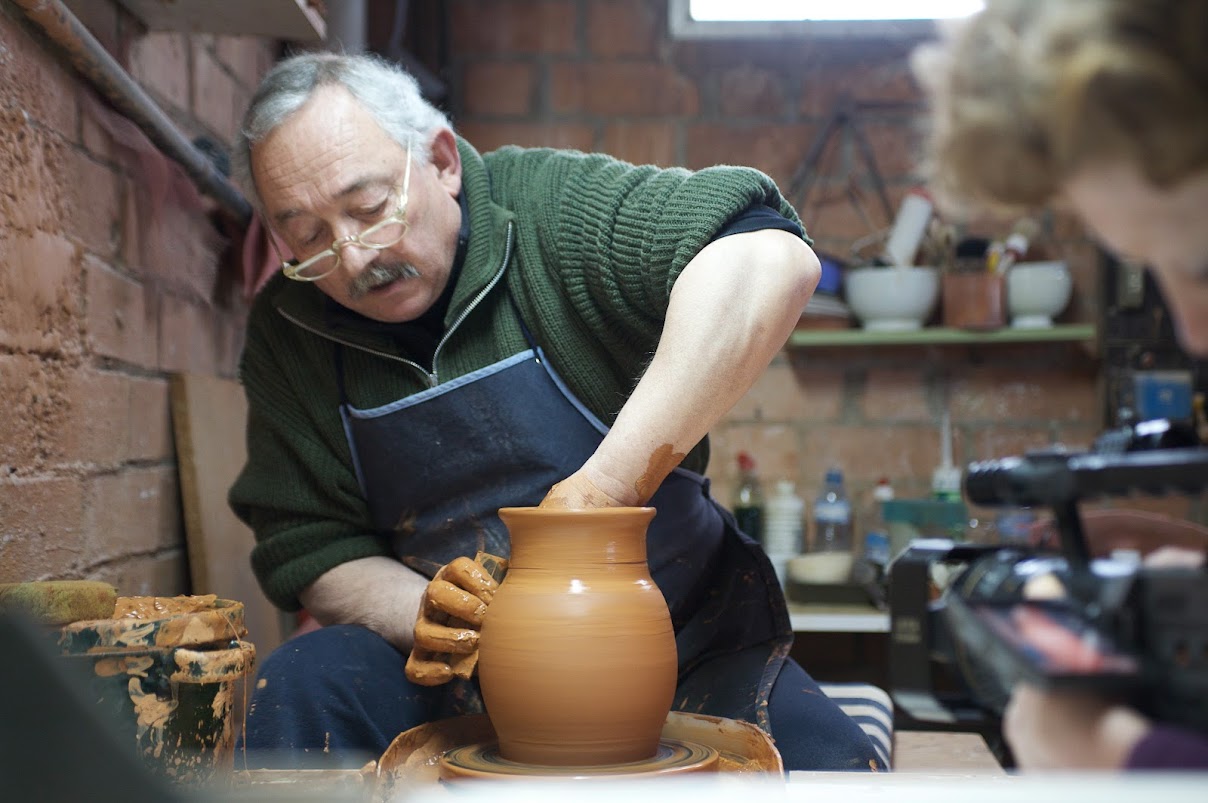
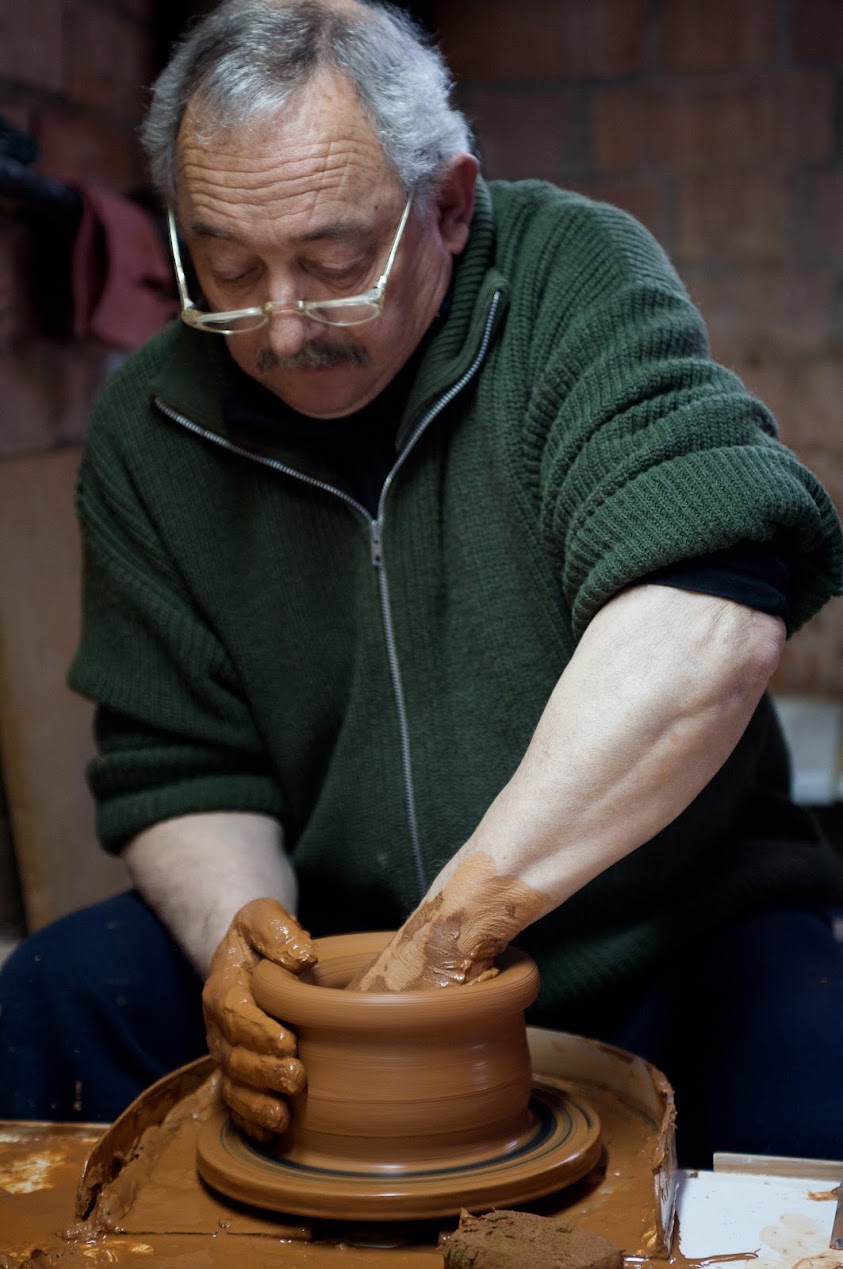
All pieces were made on the wheel or with the estec. The botxes —the thrown part of the pitchers— and the trimming, which was done by hand. Guarnir means adding the handle, spout and rim of the pitchers, that is, finishing the pieces after the main part was thrown on the wheel.
The potter needed few materials. The clay, which he made himself. The moulds for making pieces with the estec with their corresponding templates, and the wood. Galena for glazing, and the ball mill for grinding the galena, which was mixed with starch to give it adhesion. The firing materials: tarros, planos, pixulins, borregos, fòtils and rodells. Llemutja and engalba for covering the supports.
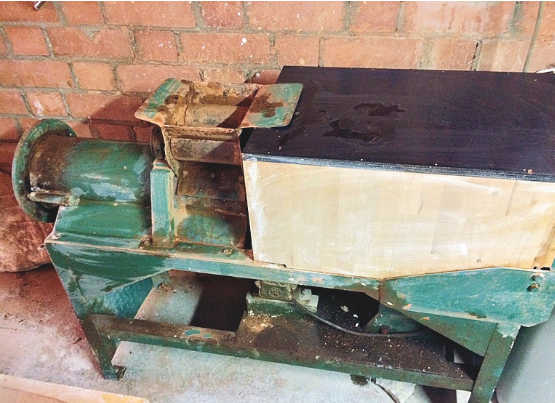
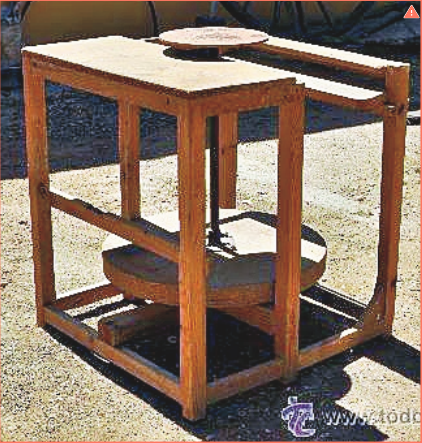
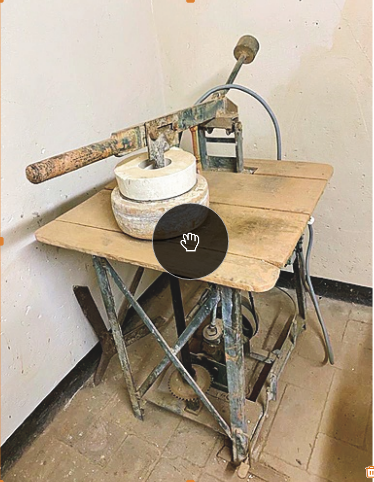
The machines: the clay mixer; the pugmill; the crusher; the rollers and the pot-making machine; the estec; and the kick wheel.
To prepare the clay, the pugmill has an intake mouth with two cylinders that feed the clay inside, where the auger carries it to the outlet, to which different dies can be attached — usually round for making cylinders, but they can also be rectangular, square, solid or hollow. Once the clay came out of the pugmill, it moved along wooden rollers that allowed a good length of the chosen form to be produced. At the arch visible at the outlet there is a wire for cutting the emerging clay.
The kiln was very large, Arabic-style masonry, with vaulted ceilings and external rings if necessary. The temperature was determined by the colour of the fire. Pyrometers did not exist. Firing was a matter of experience passed down from fathers to sons.
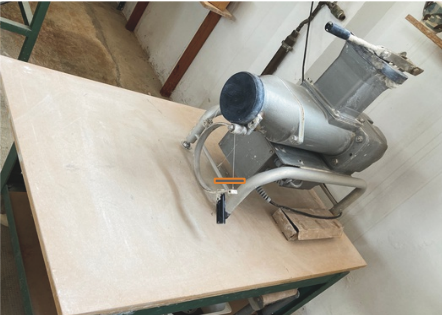
The estec, or mechanical mould-throwing, consisted of a wheel that, instead of a bat, had a metal mould-holder attached to the rotating shaft. The mould-holder carried a standard interchangeable plaster mould depending on the piece to be made. The outside of the plaster mould matched the inside shape of the holder, and the inside was the external profile of what would become the clay piece, at the centre of which a ball of clay of calculated size or weight was placed. The inside shape of the piece was given by a steel or wooden template, also interchangeable, which was half of the internal profile, attached to a lever that descended through the centre of the mould until almost touching it. It had a stop set at the desired thickness to obtain the required wall thickness. The clay rose up along the wall from the original position of the clay ball, thanks to a wooden piece attached to the template, held by an arm clamped to the estec table, descending to the stop with the help of a wet sponge. The moulds used were single-piece and had draft.
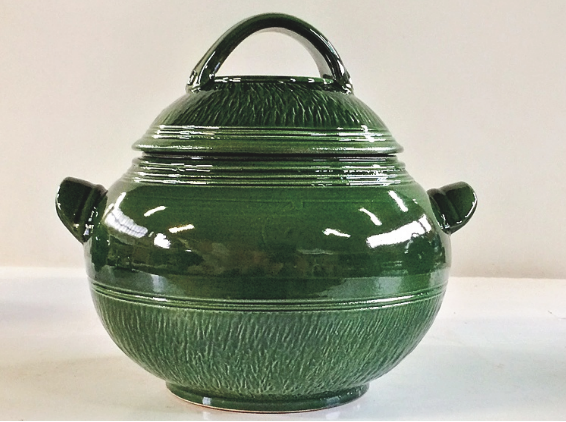
Ceramist's Materials, Tools and Machines
The ceramist needed red clay like the potter, but bought it packaged; the slab clay also came packaged; stoneware materials were bought in powder form and porcelain was bought liquid, in drums. Few people made stoneware in artisan workshops in 1970, until the paste was packaged and commercialised.
At the ceramist’s workshop, only stoneware was prepared — weighing the elements of the chosen formula and mixing them with water in an elevated 500-litre tank, inside of which there was a large wall-mounted agitator. The clay became liquid and thick, ready for slip casting. It came out through a tap at the bottom of the tank that connected to the slip-casting hose. If it was to be used for the wheel or the estec, it was passed through the filter press until it reached the desired consistency. Red clay and slab clay were bought packaged, and liquid porcelain in drums.
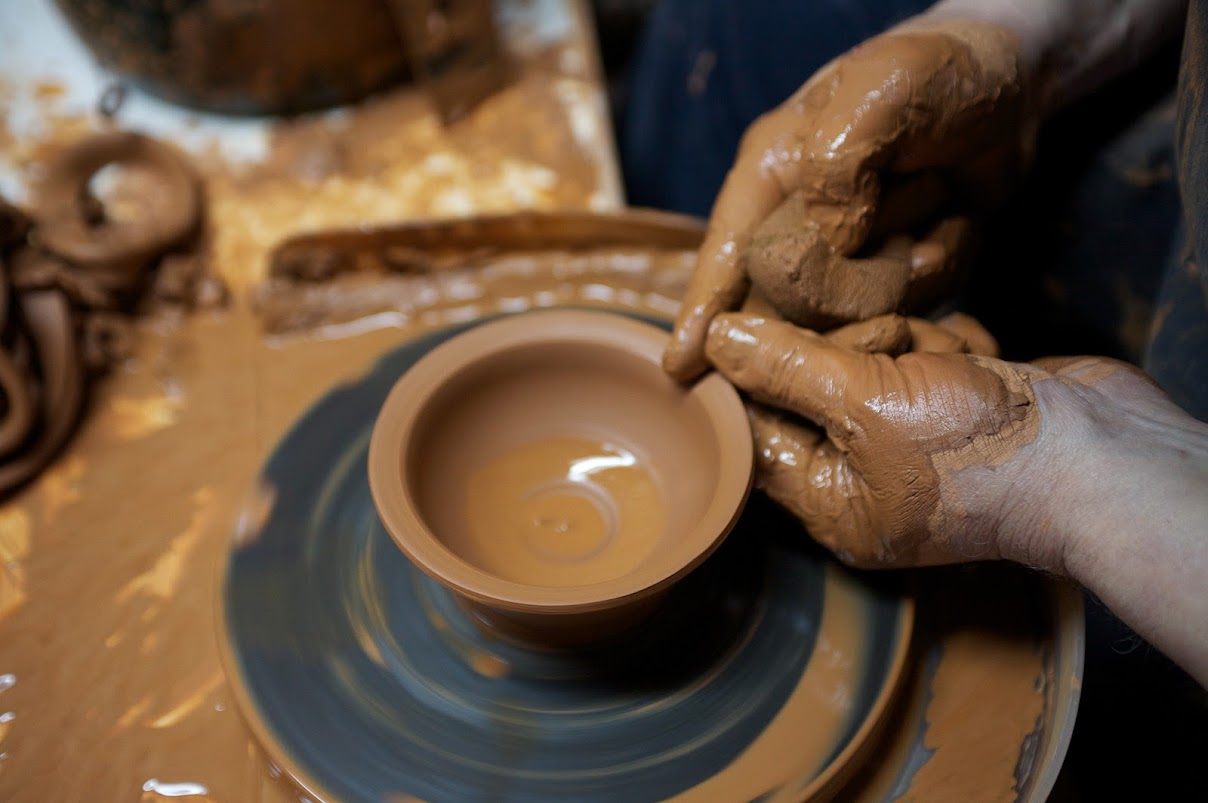
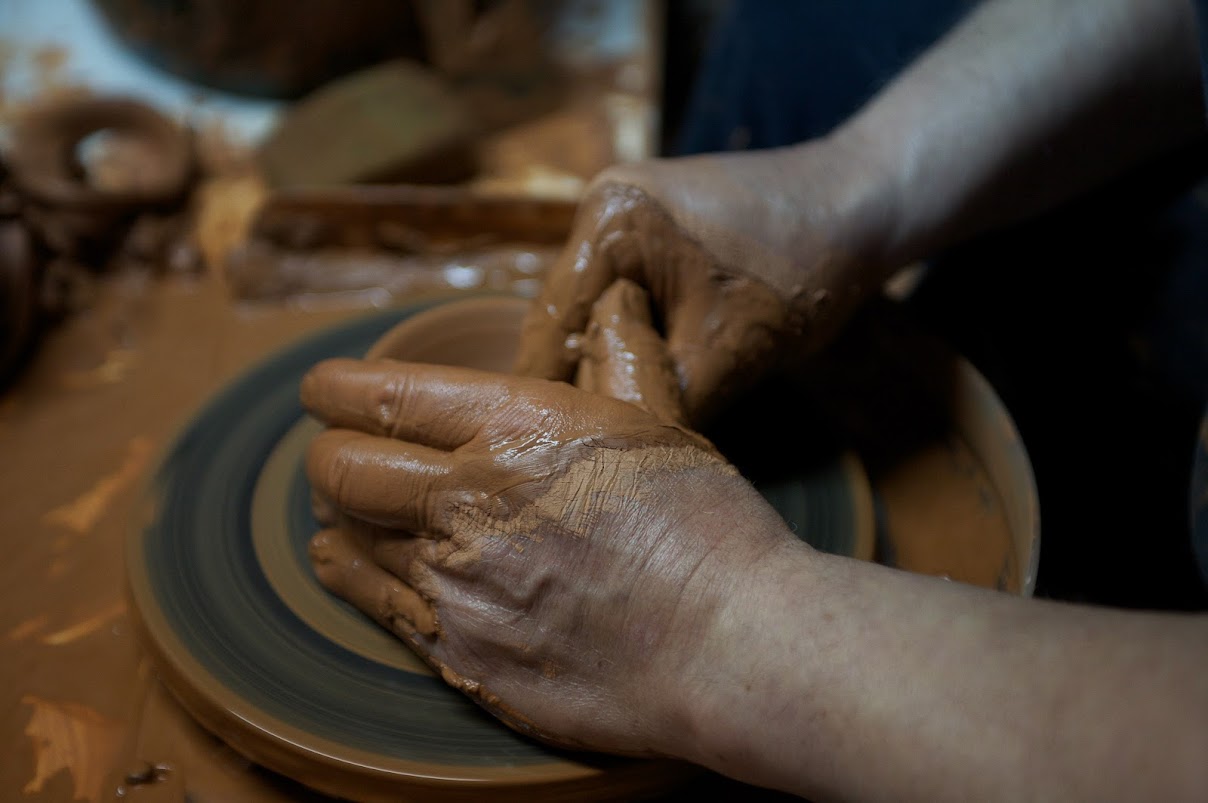
The process of making pieces on the wheel was the same in the workshop as in the traditional pottery, except that the ceramist’s wheels were more modern, all electric with gears to regulate speed.
The ceramist used the following machines: the wall agitator, the filter press for making stoneware, the mechanical rotary press and the pneumatic press. The slab roller, first manual then mechanical. The wheels: first kick wheels and then mechanical wheels. The same mechanical wheels were used for the estec, with their corresponding moulds and templates.
The pugmills: one for red clay, another for slab clay, and for stoneware the stainless steel pugmill. The compressor for the spray gun and the booth with extractor. The materials for stoneware formulas: colouring oxides and enrichments, in powder form. A scale, balance scales and precision scales. Also commercial glazes in powder form. They needed brushes, plastic buckets for dipping pieces, sieves for straining glazes.
For firing, they had differentiated material depending on whether the batch was high or low temperature. Grooved steatite shelves for low-temperature firing, up to 1000°C, and cordierite, thicker and ungrooved, for high-temperature, up to 1300°C. The posts were made of carborundum in various sizes according to the high-temperature pieces. Stilts and cylindrical spurs, also in different sizes, to separate shelves.
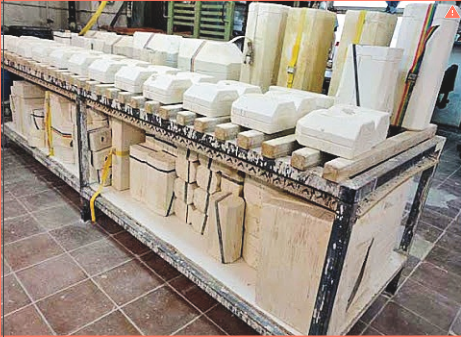
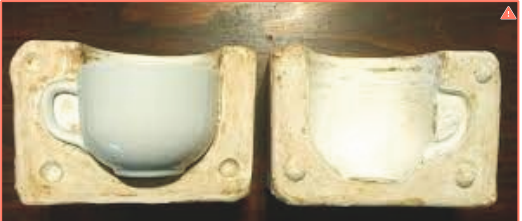
Slip casting was the most commonly used procedure in the workshop. It consisted of fitting the three parts of the plaster mould — the base and the two sides — closing them so the joints matched and securing them with a wide elastic band around the outside. Then they were filled with barbotine or liquid clay to the very top, all the moulds arranged on laminated tables. The plaster absorbed the water from the clay, which thickened against the mould wall. When it was thick enough, the mould was turned over to pour out the excess clay and left to drain on the table sheets. Under the table there was a semi-rigid plastic sheet, inclined toward the end of the table, which collected the excess clay into a bucket.
Before removing the finished pieces from the mould, the necks were taken off — the top part of the piece that would not be part of it, but which left the edge perfectly finished. It also served to check whether the clay thickness was correct while the mould was still full. The necks were removed with a gesture, first inward and then upward. They came off immediately.
The pieces were taken out of the moulds when they had enough consistency and placed on boards on the barrers to dry. Once dry, the pieces had to be fettled, that is, removing the seam marks left by the mould joints. This was done with a falzilla, a kind of knife, or with sandpaper, and then finished with a damp sponge.
The Terra i Foc Workshop Structure
The Early Years (1969-1972)
The Workers
A Day at the Workshop
Packaging and Distribution
Administration
Data
| Year | Milestone | Kiln | Production |
|---|---|---|---|
| 1969 | Workshop founded | Wood-fired kiln | Commission pieces and own collection |
| 1973 | Move to El Pago (Subirats) and incorporation of S.A. | Wood-fired kiln | Commission pieces and own collection |
| 1975 | Dissolution of the S.A. and continuation alone | Wood-fired kiln | Commission pieces and own collection |
| 1987 | Medal at Expohogar (Barcelona) — 7th design competition | Wood-fired kiln | Design pieces and own production |
| 1987–1997 | Collaborations with Casa Bohèmia, Carosa disseny, Elisa | Wood-fired kiln | Production for third parties |
| 1994 | Exhibition in Madrid with the Col·lectiu de Ceramistes Catalans | Wood-fired kiln | Own pieces |
| 1995–1997 | Madrid ceramics and gift fair with Ceràmica Artística Catalana | Wood-fired kiln | Own pieces |
| 2000 | Electric kiln acquired | Electric + wood kiln | Stoneware and high-temperature pieces |
| 2010 | Joan Martínez retires | Electric kiln | Sporadic continuation |
— 04
Collaborations
Artists, artisans and commissions that have shaped the journey.
Collaborating Ceramists
- Benet Ferrer, friend, schoolmate, ceramist and professor at Escola Massana
- Josep Sanahuja, ceramist from Olesa de Montserrat
- Manel Serran, ceramist from Monistrol de Montserrat
- Salvador Manyosa, sculptor
- Maties Palau Ferrer, painter and ceramist
- Rovira brothers of Esparreguera, mechanics and potters
- Echevarria, as a refractory thrower
- Delpeix of Sant Sadurní, and Fernando, as throwers and for bisque
- For the ceramist Sedó of Esparreguera, they cast and bisque-fired orders that he finished
Representatives
- Robert Aresté and wife — Barcelona and nearby towns, 1969–1994
- Ramon Fàbregas — Barcelona, 1973–1974
- Josep Boada (Vilafranca) — Wholesaler from 1975 to 2000 for Terra i Foc, Josep Sanahuja, and Manel Serran. He distributed throughout the Peninsula and the Balearics except Barcelona.
- Agustí Monte Montornès — Barcelona, 1995–1997
- Elia Herranz — Barcelona, 1998–1999
- Joaquim Rambla — Catalonia, 1995–1996
- Manuel Coscolla — Valencia, Alicante, Murcia and Castelló, 1995–1999
- Antoni Albert — Galicia and Basque Country, 1995–1996
- Miguel Moreno — Madrid, 1994–1998
- Enrique Carlos Añino — Seville, 1995–2000
- Ángel Hidalgo — Córdoba, 1995–2000
- Joan Martínez — Balearics, 1994–2007
Maties Palau Ferré
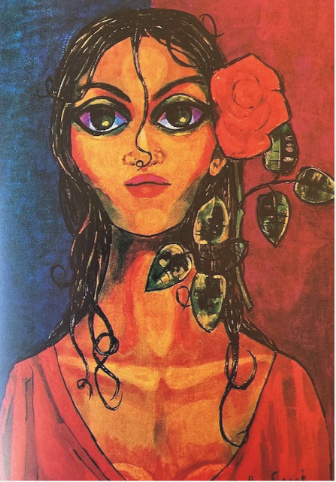
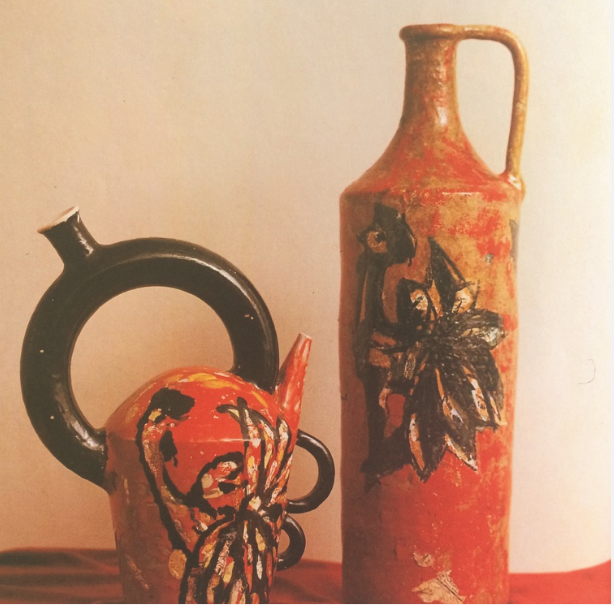
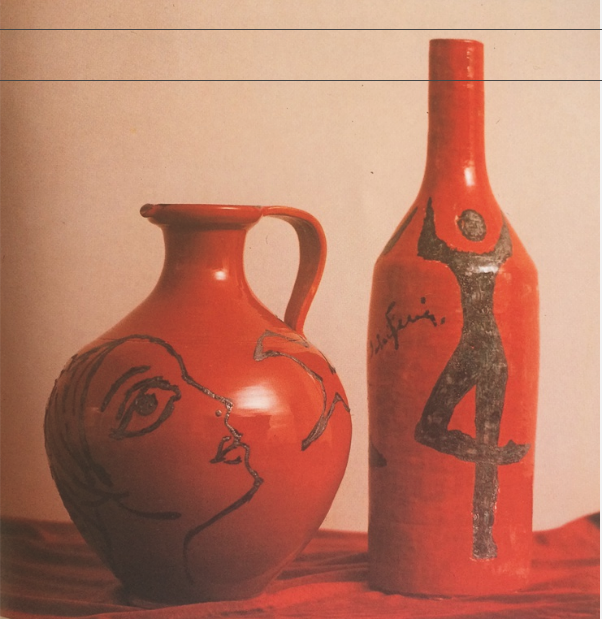
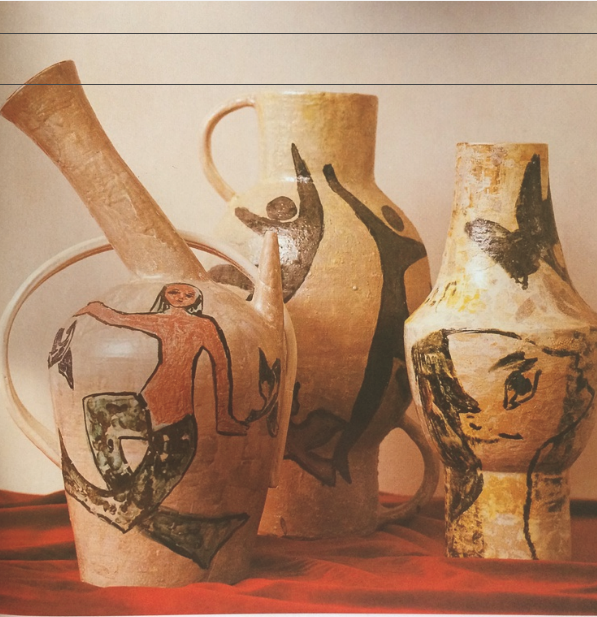
9 — Collaborating artists of the workshop 1. Maties Palau Ferré The life of painter, sculptor and ceramist Maties Palau Ferré (1921–2000) is a love story for art distorted by the baseness and miseries of greed and bad faith. With the added disadvantage that the unwanted and not purely artistic notoriety he acquired between the early 1970s and mid-1980s has harmed his posterity. At least it has made him less well-known than he seems to deserve given the success he enjoyed in life. With The Painter Who Burned His Paintings. Biographical Essay of Maties Palau Ferré, historian Francesc Marco-Palau (Tarragona, 1989), a grand-nephew of the artist, seeks to help recover his figure and work. Known to some as «the second Picasso» —an enormous compliment that the artist, reasonably, did not appreciate: «I am the first Palau Ferré», he would reply—, Maties Palau Ferré was born in Montblanc in 1921 into a family of merchants and espadrille makers. They also owned land and had certain cultural interests. Palau Ferré was clear about his artistic vocation very early on and, after the civil war —he narrowly avoided being mobilised with the quinta del biberón—, he won a position at the Institut de Previsió that allowed him to settle in Barcelona. The job was only an excuse: if he had gone to Barcelona, it was to train as an artist and make a place for himself in the art world. He enrolled at the Escola de Belles Arts Sant Jordi and gradually made a place for himself within the Barcelona art circuit. More information: Matías Palau Ferré — Wikipedia
Benet Ferrer Bolunya
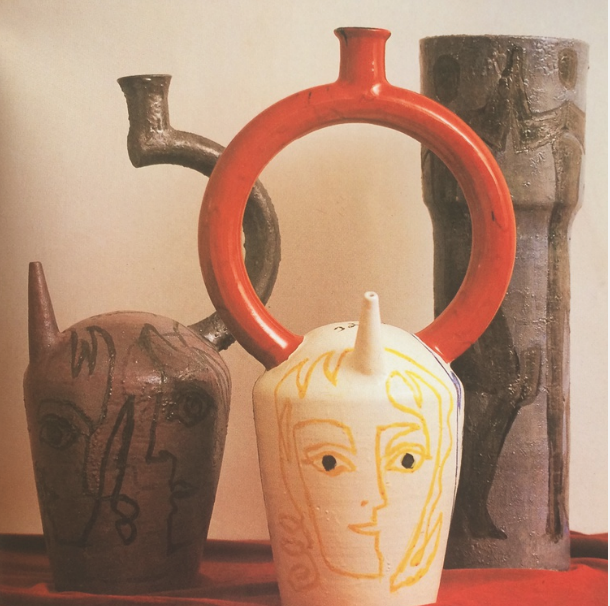
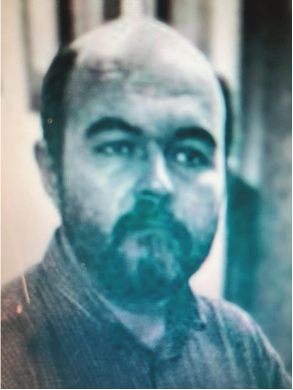
2. Benet Ferrer Bolunya (Sabadell, 25 April 1945) A Catalan artist. He studied at the Escola Industrial d'Arts i Oficis in Sabadell (1962–1966) and at the Escola Massana (1966), and soon became interested in ceramics as a sculptural medium. Connected from a young age to the avant-garde, the most important part of his work — the exact representation of everyday objects — is hyperrealist in orientation. He has also carried out happenings and various collective actions with public participation. In 1969 he began teaching at the Escola Massana. In 1976 he presented an exhibition of terracotta sculptures at Galeria G. At Espai 10 of the Fundació Joan Miró in 1980 he introduced an unfired clay structure that extended out of the room, as if crossing the glass wall, spreading outward into the olive tree courtyard. According to Daniel Giralt-Miracle, this exhibition was a key moment in the artist's career. In 1977 he created the ceramic mural on the Ebro motorway at Fraga. He has extensive experience in ceramics; from the 1970s he experimented with meta-objects that played with reality through visual and tactile fiction, later moving to works linked to conceptual art and marquetry objects. In 1985 he received a grant from the Department of Plastic Arts of the Government of Catalonia for furniture pieces. In 1987 he became a member of the Académie Internationale de la Céramique in Geneva. In 1988 he created the Campoamor sculpture in Sabadell. More information: Benet Ferrer Bolunya — Wikipedia
.png)
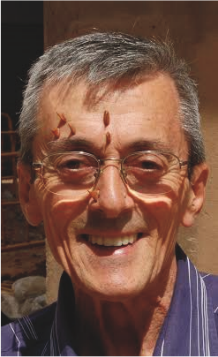
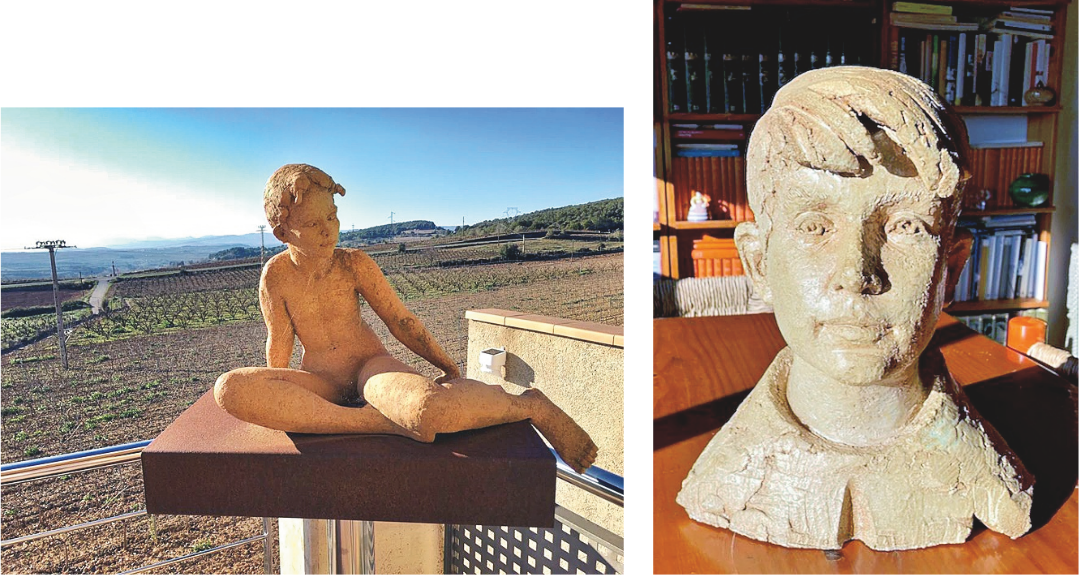
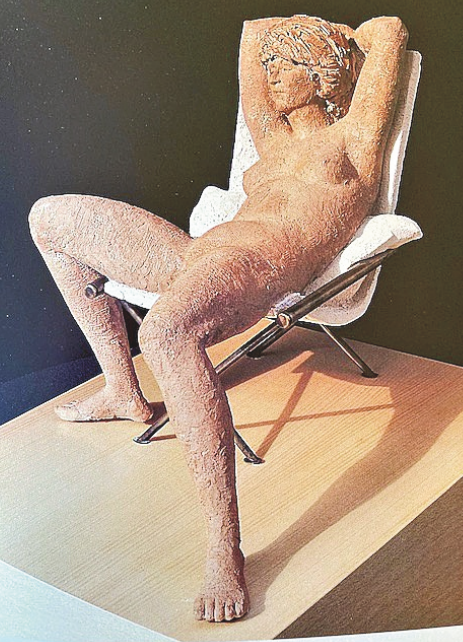
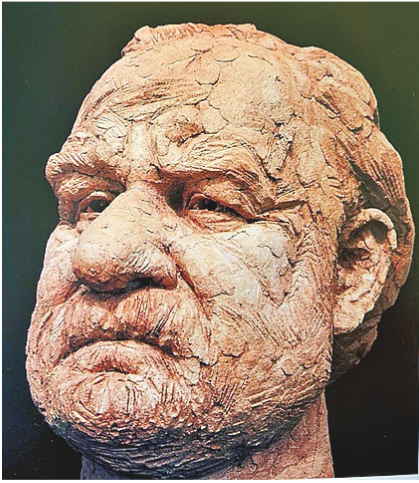
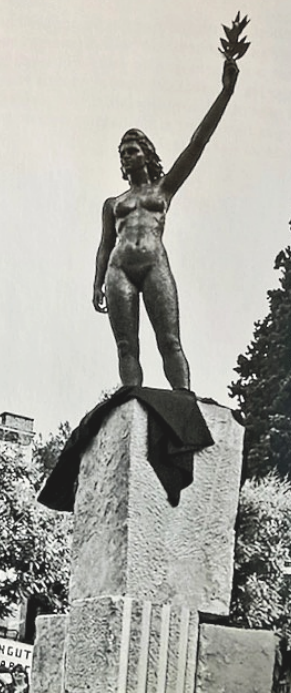
Salvador Mañosa
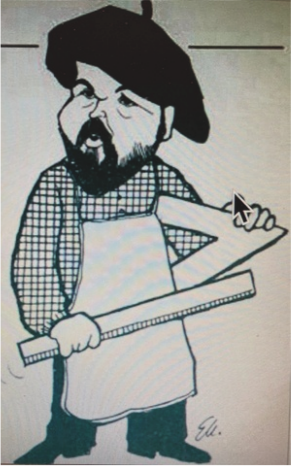
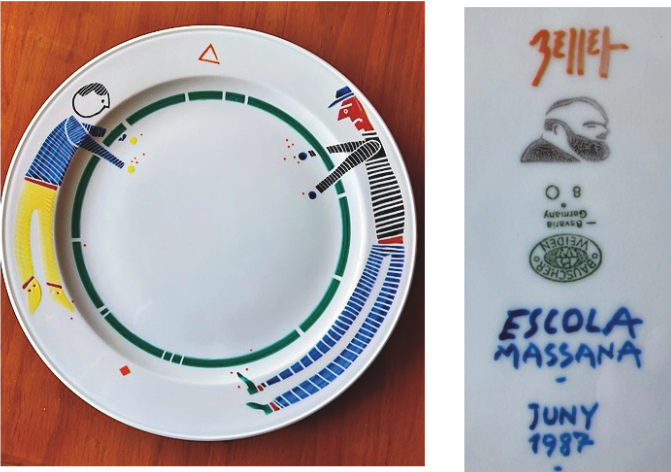
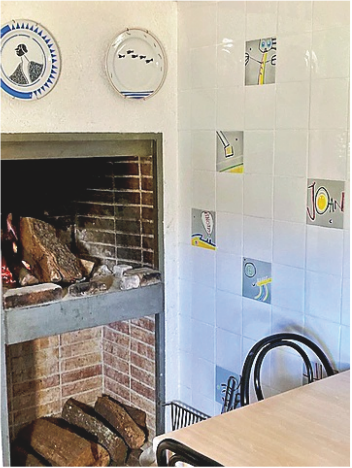
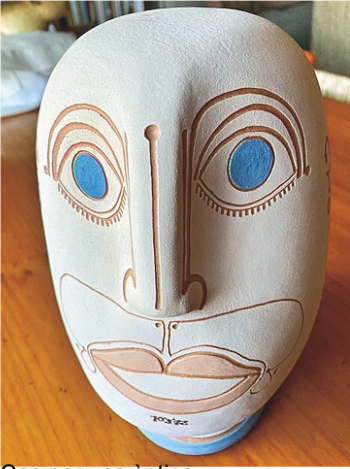
3. Salvador Mañosa Jané (1945–2022) Originally from Cerdanyola del Vallès but deeply rooted in Barberà del Vallès, Salvador Mañosa began as an apprentice at age 15 in the workshop of Francesc Juventeny, combining this traditional workshop training with studies at the Escola Massana in Barcelona. There he had Eudald Serra as a teacher, a prominent figure of Catalan modernity from the 1930s to the 1960s. Mañosa's technique shows a knowledge of the traditional craft, with clay and later bronze as characteristic materials of his work, coexisting with more modern techniques without losing the artisanal essence characteristic of the sculptor. His female nudes stand out, with a careful technique that seems to have endowed them with movement. Mañosa has also dedicated much of his work to large-scale public sculpture in many cities across Catalonia and Spain, as well as in Brazil, Russia, France, Japan, Germany, and the United States. Salvador Mañosa died on 15 November 2022 at the age of 77. He dedicated part of his time to teaching specific subjects of his profession, sharing his knowledge and experience in the art of sculpture, stating that "it is a great satisfaction and the best reward to see how some of my students are now exhibiting around the world." More information: Salvador Mañosa, l'escultor de Cerdanyola
Joaquim Casadevall i Vergés
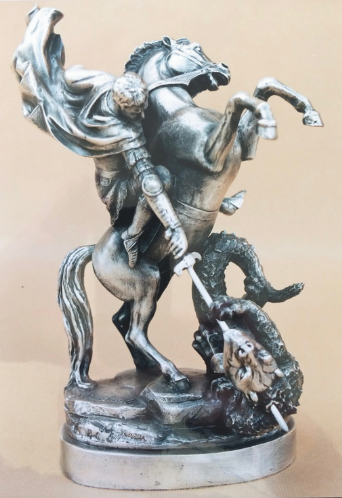
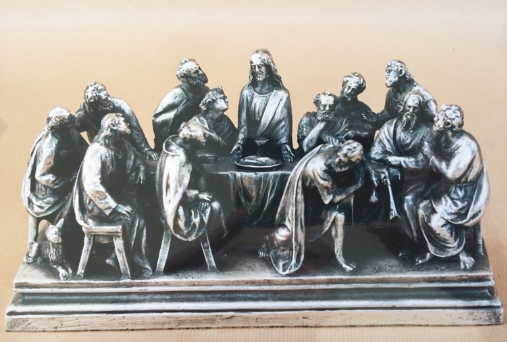
4. Joaquim Casadevall i Vergés (1895–1974) Joaquim Casadevall was born in Olot, very close to Joaquim Vayreda. His parents were the Vayreda family's tenant farmers, and as a child he was tasked with cleaning the painter's brushes. This is how he learned the craft. He was more interested in sculpture and practised it in Barcelona. He lived in the Sagrada Família neighbourhood and had a small workshop near the Dam factory. He would fire his clay pieces at the workshop of Joan's parents. Joan remembers they carried the pieces in a bundle tied in a handkerchief, stacked in three or four layers. They went by bus, sometimes with his wife who helped him. We know he sold his work at the Montfalcon shops in Barcelona and also at the Hotel Colón. His best-known works are Saint George on Horseback and the Last Supper. He probably died in the mid-20th century. Despite being a good sculptor, after his father's workshop closed no further references were found. We wish to pay tribute to him here, because we consider him a great sculptor.
We dedicate this book to all those who have collaborated in making this collection of the work done at the workshop over more than forty years.
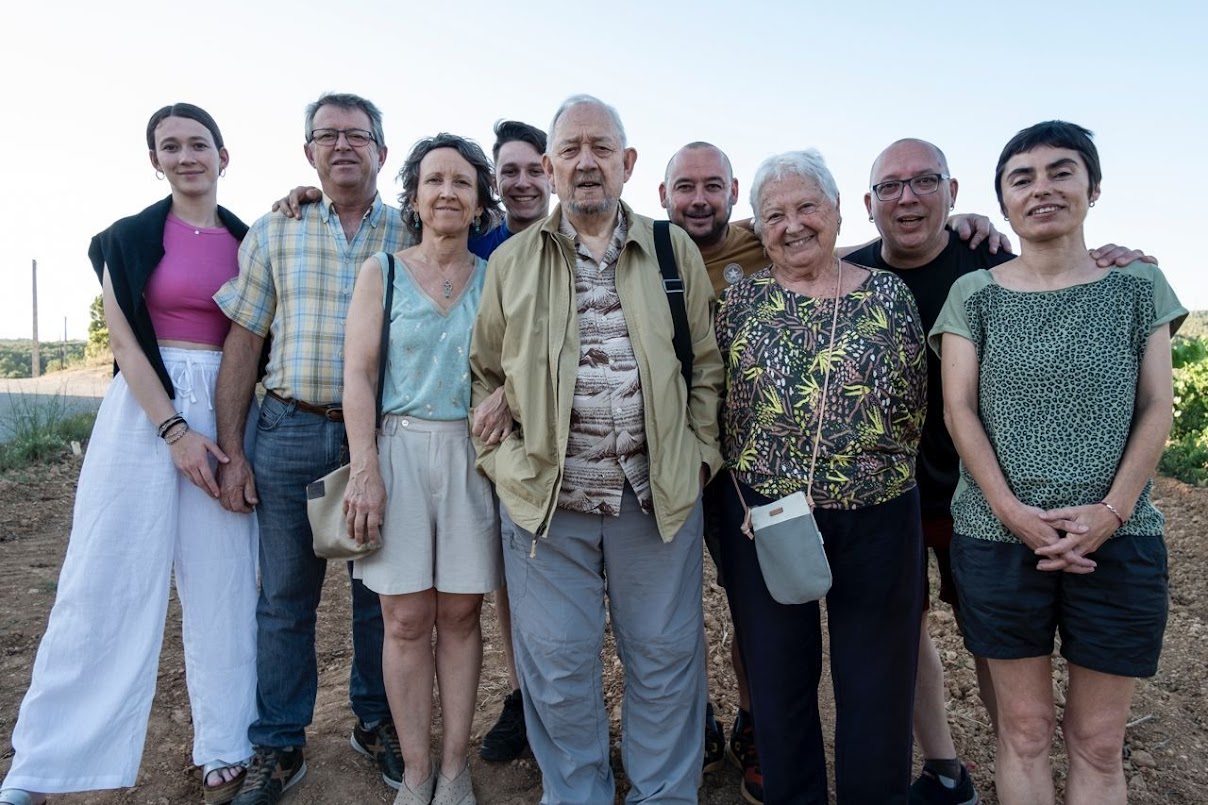
To our children and grandchildren, so they may remember the part they lived.
To Dolors Albós for proofreading the text and to Dolors Bosch for helping make the writing understandable for people unfamiliar with the craft.
Also to record how parents and grandparents worked the craft differently, and to thank them for their shared experience.
El Pago, August 2022
— 05
Gallery
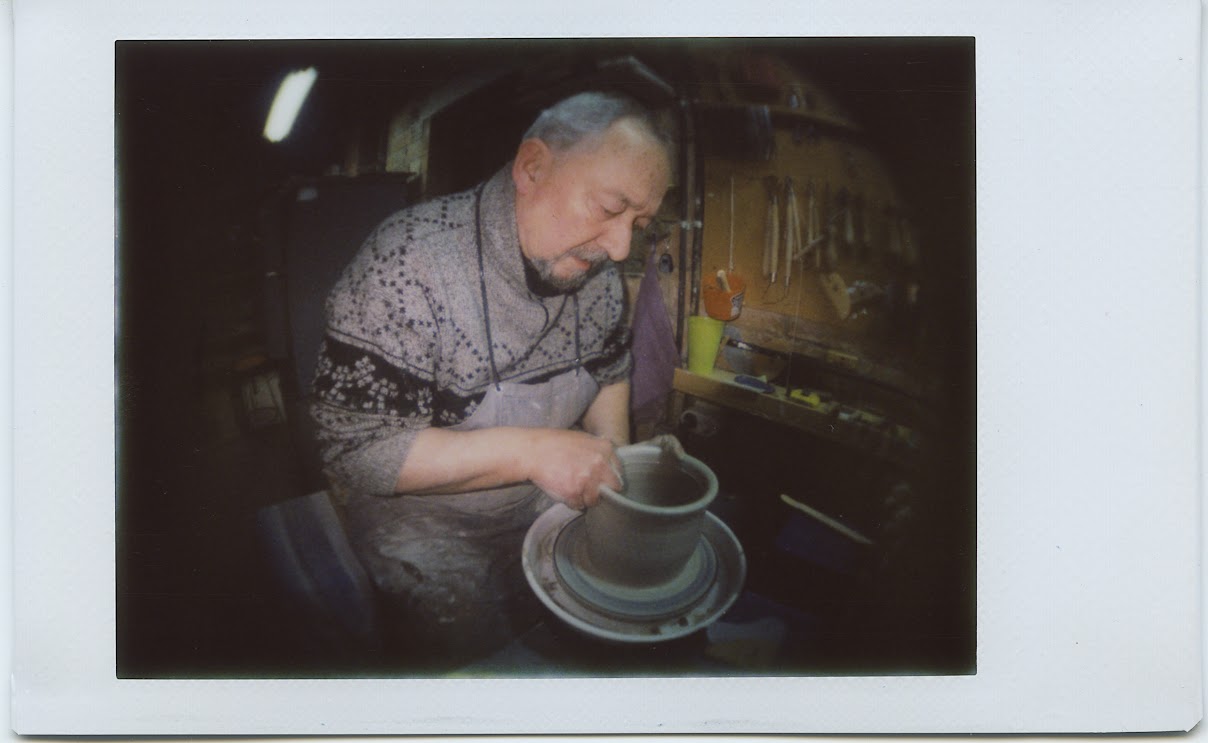
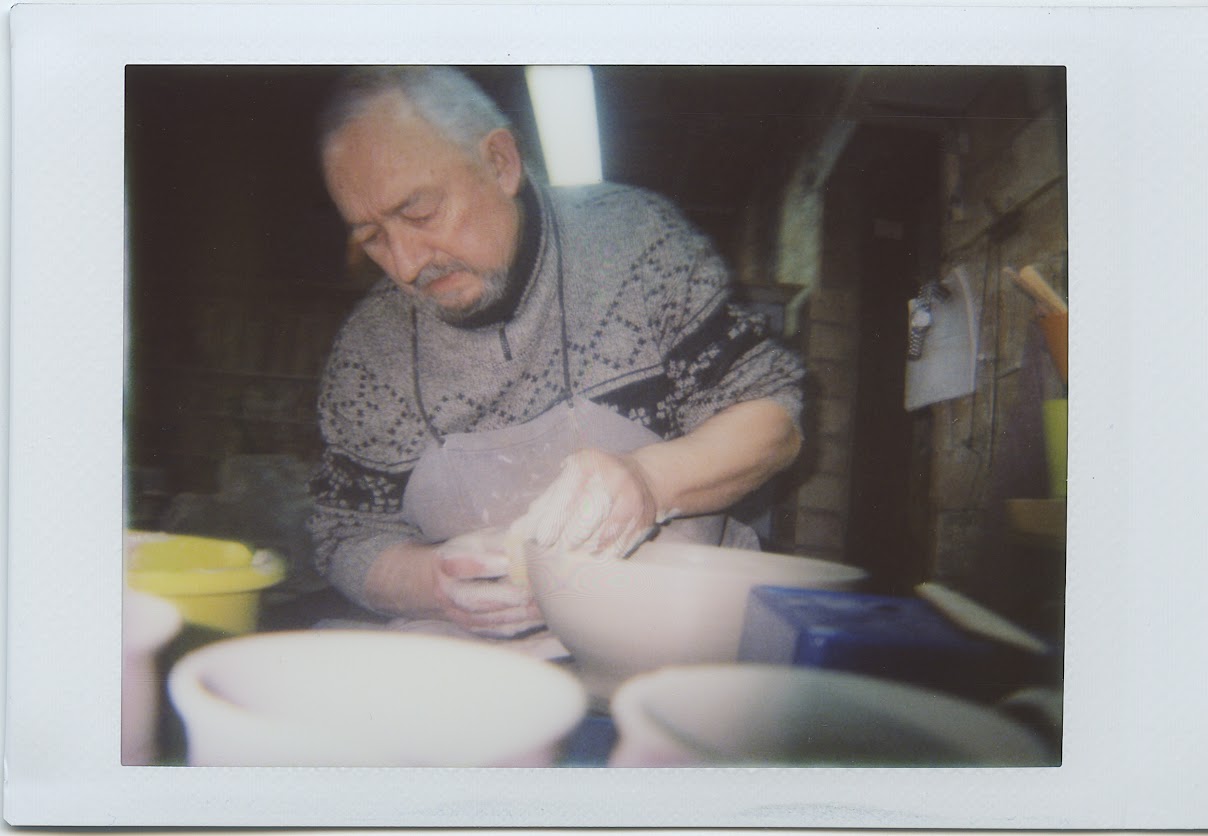
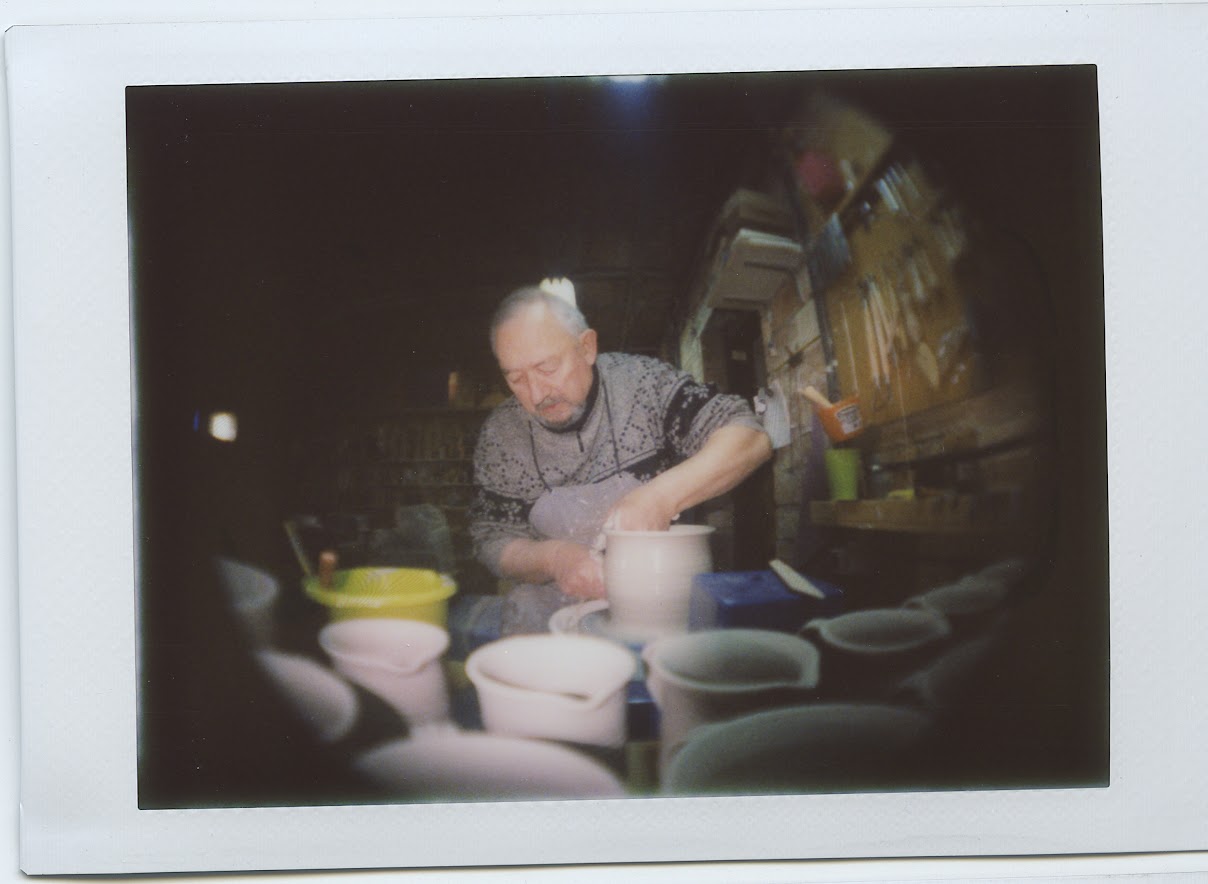
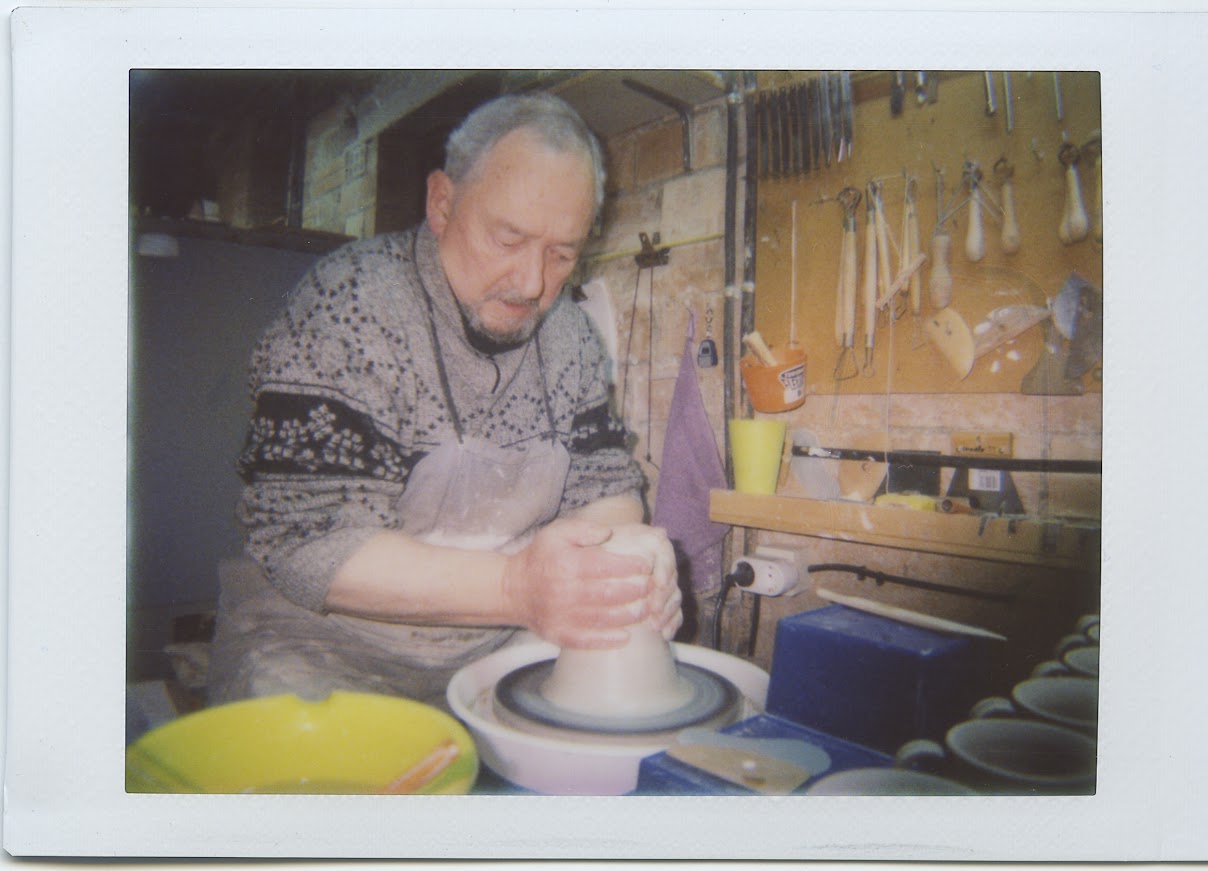
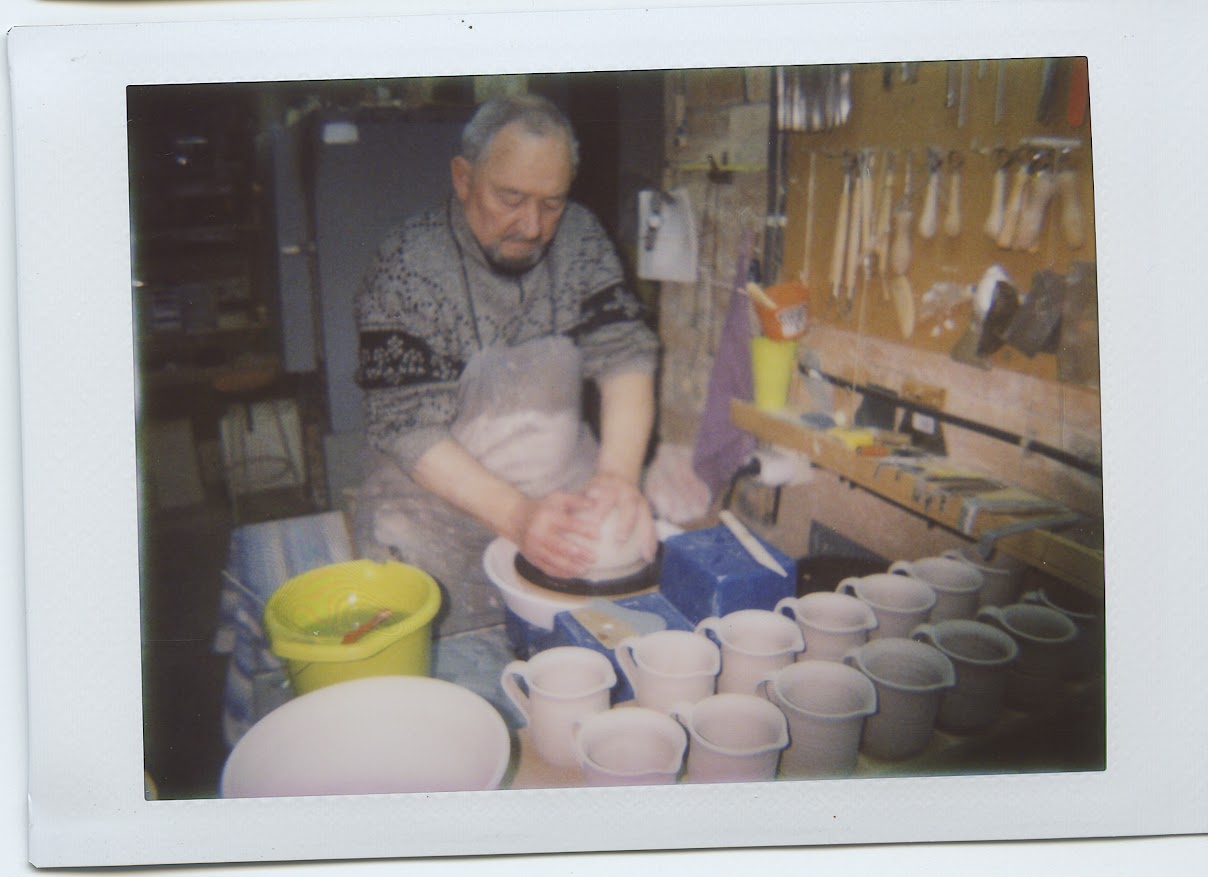
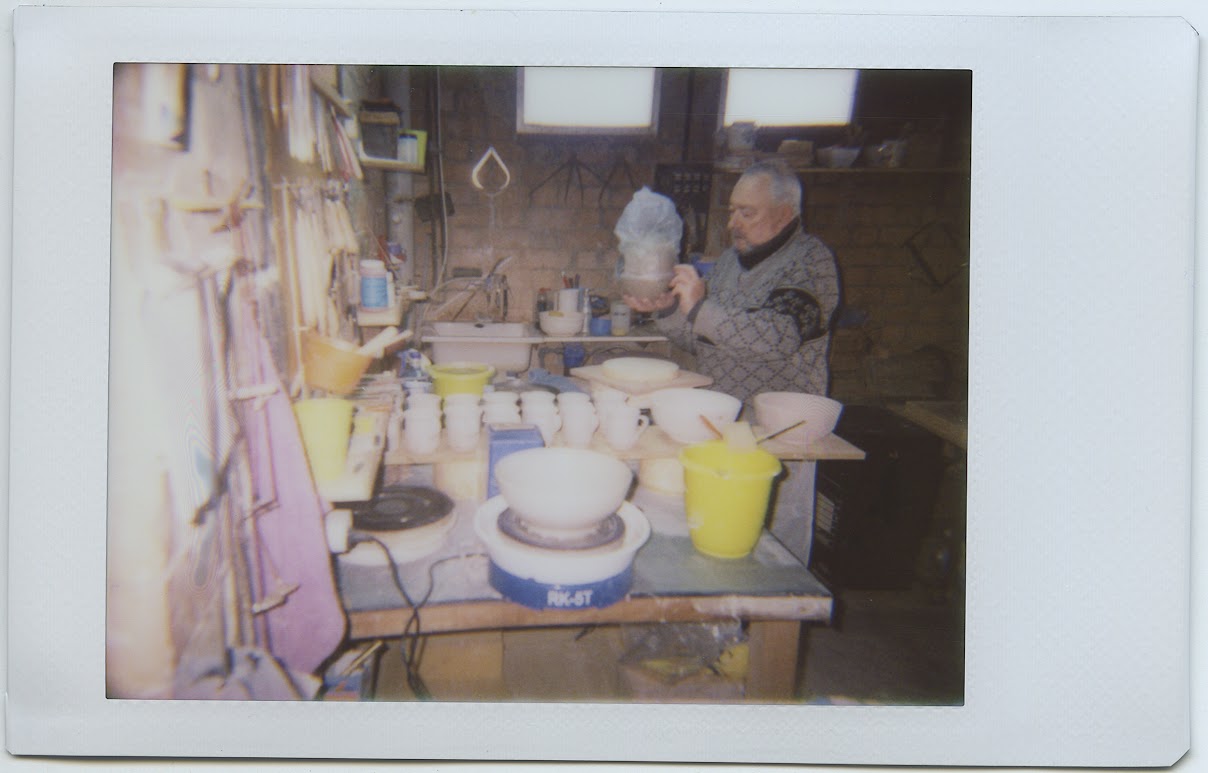
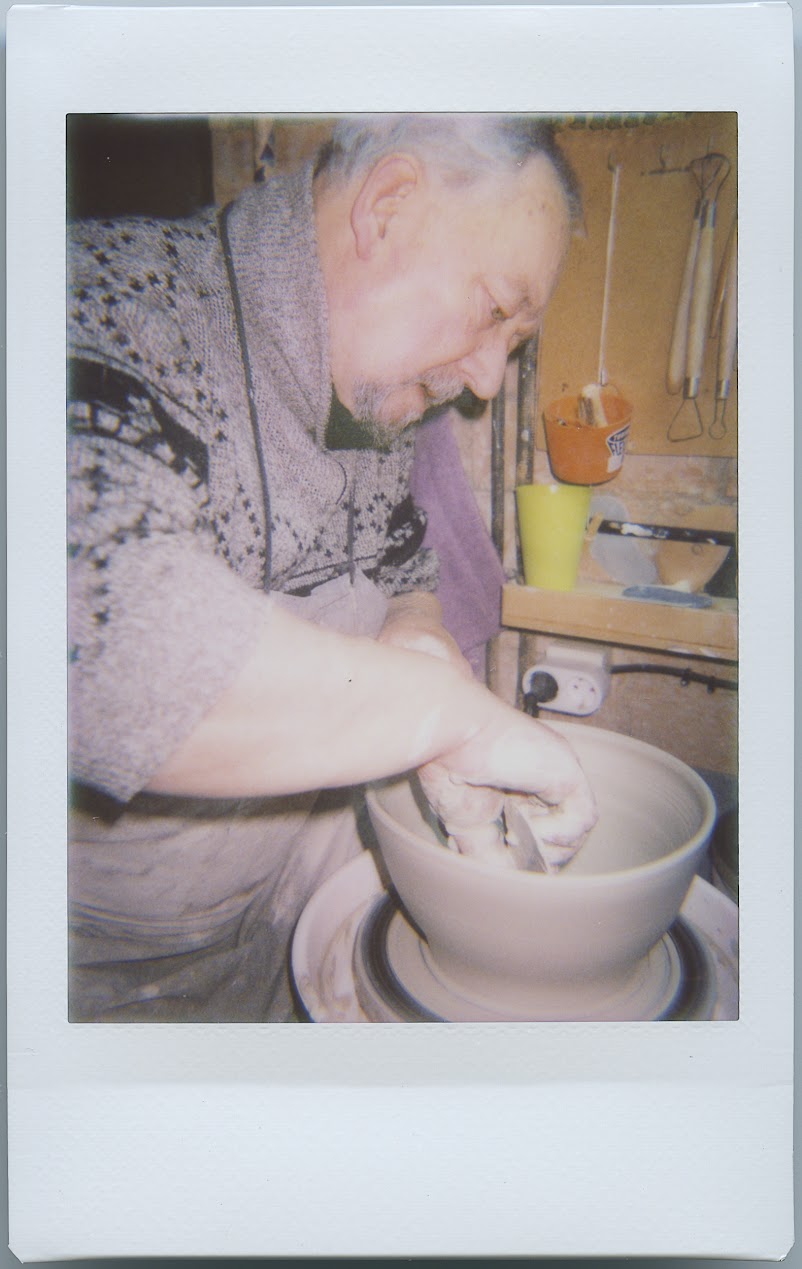
Automat snapshots.
— 06
Contact
The workshop remains active on a testimonial basis. Joan Martínez i Serres, the founder's son, keeps alive the legacy of Grandfather Joan. If you'd like to visit us, commission a piece, or just learn more, drop us a line.
Carrer de la Verge de Montserrat, 17, El Pago (Subirats), Barcelona